Walk into any dinnerware section and you'll see three words repeated endlessly: ceramic, porcelain, and stoneware. They all look like dishes. They're all made from clay. So what actually makes them different — and does it matter when you're choosing a set for your home?
The short answer: yes, it matters quite a bit. The material affects how durable your dishes are, how they look, how they handle heat, and how you need to care for them. This guide breaks it all down clearly.
The Big Picture: What Are These Materials?
All three — ceramic, porcelain, and stoneware — are made by shaping clay and firing it in a kiln at high temperatures. The differences come from the type of clay used, the firing temperature, and the density of the final result.
Think of it this way: ceramic is the parent category. Both stoneware and porcelain are types of ceramic. When a store says "ceramic dinnerware," they usually mean earthenware or a general ceramic body — though technically, stoneware and porcelain are also ceramics.
Stoneware: Durable, Rustic, Everyday-Ready
Stoneware is fired at 1200–1300°C (2192–2372°F), which makes it dense, non-porous, and very durable. It's the workhorse of the dinnerware world — built for daily use, family meals, and busy kitchens.
Key characteristics of stoneware:
- Dense and heavy — gives a satisfying, substantial feel in hand
- Excellent heat retention — keeps food and drinks warm longer
- Naturally chip-resistant — tolerates the bumps of daily use well
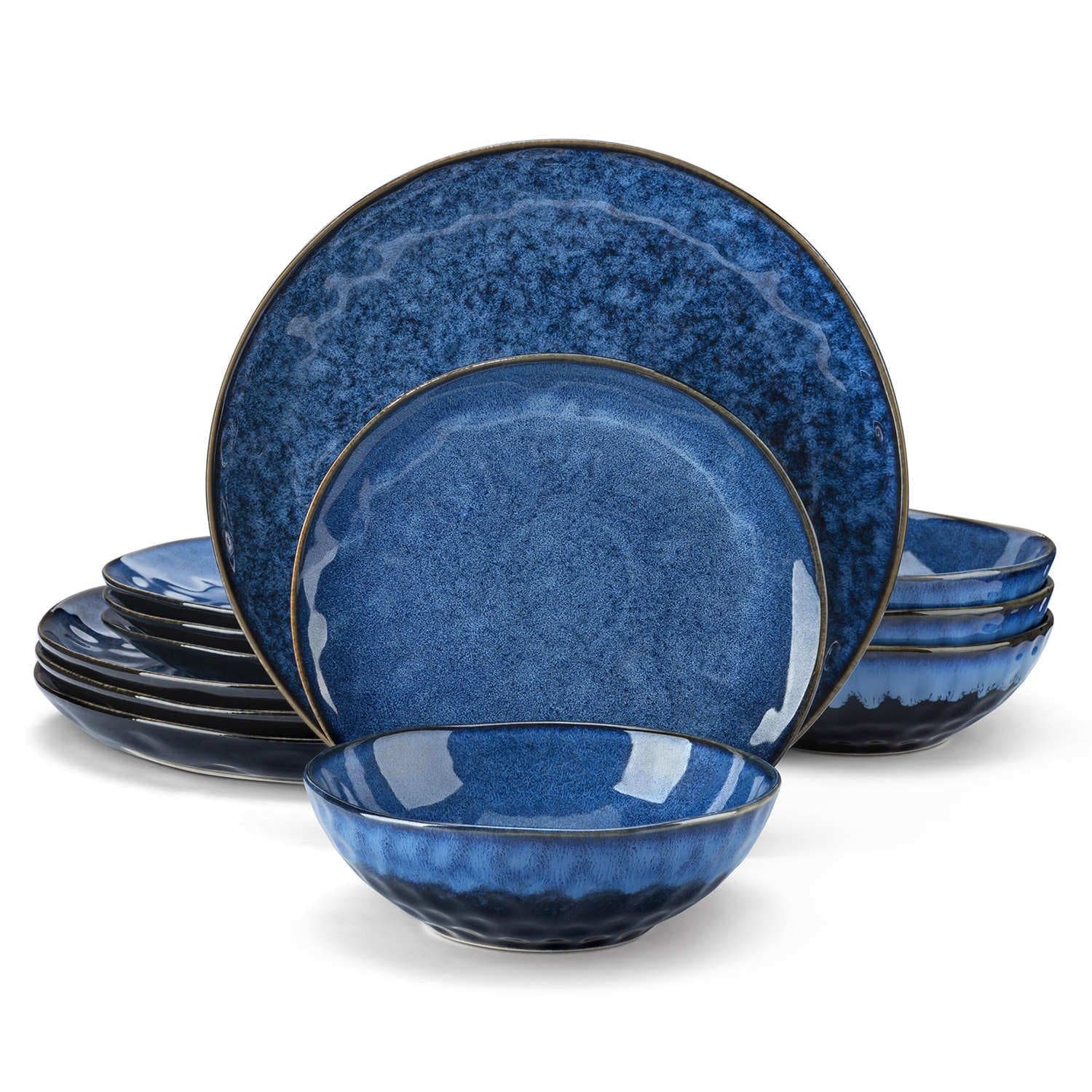
- Earthy, rustic aesthetic — reactive glazes create unique variation in each piece
- Microwave and dishwasher safe (when lead-free glazed)
- Oven safe up to 200–250°C (392–482°F) in most cases
Porcelain: Refined, Elegant, Chip-Resistant
Porcelain uses a finer white clay (kaolin) fired at even higher temperatures (1280–1400°C). The result is a much harder, denser, and thinner material with a bright, smooth finish. This is the material associated with fine dining and formal settings.
Key characteristics of porcelain:
- Thinner and lighter than stoneware — more elegant in appearance
- Smooth, bright white finish — shows off patterns and colors vividly
- Very hard and non-porous — resists staining and odor absorption
- More chip-resistant at edges than basic earthenware
- Microwave, dishwasher, and oven safe (check individual product)
- More formal aesthetic — suits both everyday and special occasion use
Ceramic (Earthenware): Lightweight, Colorful, Budget-Friendly
When stores use "ceramic" as a standalone category, they often mean earthenware — the oldest type of fired clay pottery. It's fired at lower temperatures (1000–1150°C), making it lighter and more porous than stoneware or porcelain.
Key characteristics of earthenware ceramic:
- Lighter weight — easier to handle, especially for children
- More porous — requires glazing to be food-safe; can absorb odors if glaze chips
- Lower cost — typically more affordable than stoneware or porcelain
- Chips more easily — not ideal for heavy everyday use
- Wide range of colors and patterns possible
Side-by-Side Comparison
| Property | Stoneware | Porcelain | Earthenware Ceramic |
|---|---|---|---|
| Firing Temperature | 1200–1300°C | 1280–1400°C | 1000–1150°C |
| Weight | Heavy | Medium-Light | Light |
| Durability | Very High | High | Medium |
| Chip Resistance | High | Medium-High | Medium |
| Heat Retention | Excellent | Good | Fair |
| Microwave Safe | Yes (lead-free) | Yes | Usually (check label) |
| Dishwasher Safe | Yes | Yes | Usually (gentle cycle) |
| Aesthetic | Rustic, artisan | Elegant, formal | Colorful, casual |
| Price Range | Mid to Premium | Mid to Premium | Budget to Mid |
| Best For | Daily family use | Everyday & formal | Casual, budget |
Which Should You Choose?
The best material depends on how and where you'll use your dinnerware:
- For everyday family use with kids: Stoneware is your best bet. It handles rough handling better, keeps food warm, and the natural variations in each piece mean small scratches and marks are less noticeable.
- For a mix of everyday and entertaining: Porcelain works beautifully for both. It looks elegant for guests but is still durable enough for daily meals.
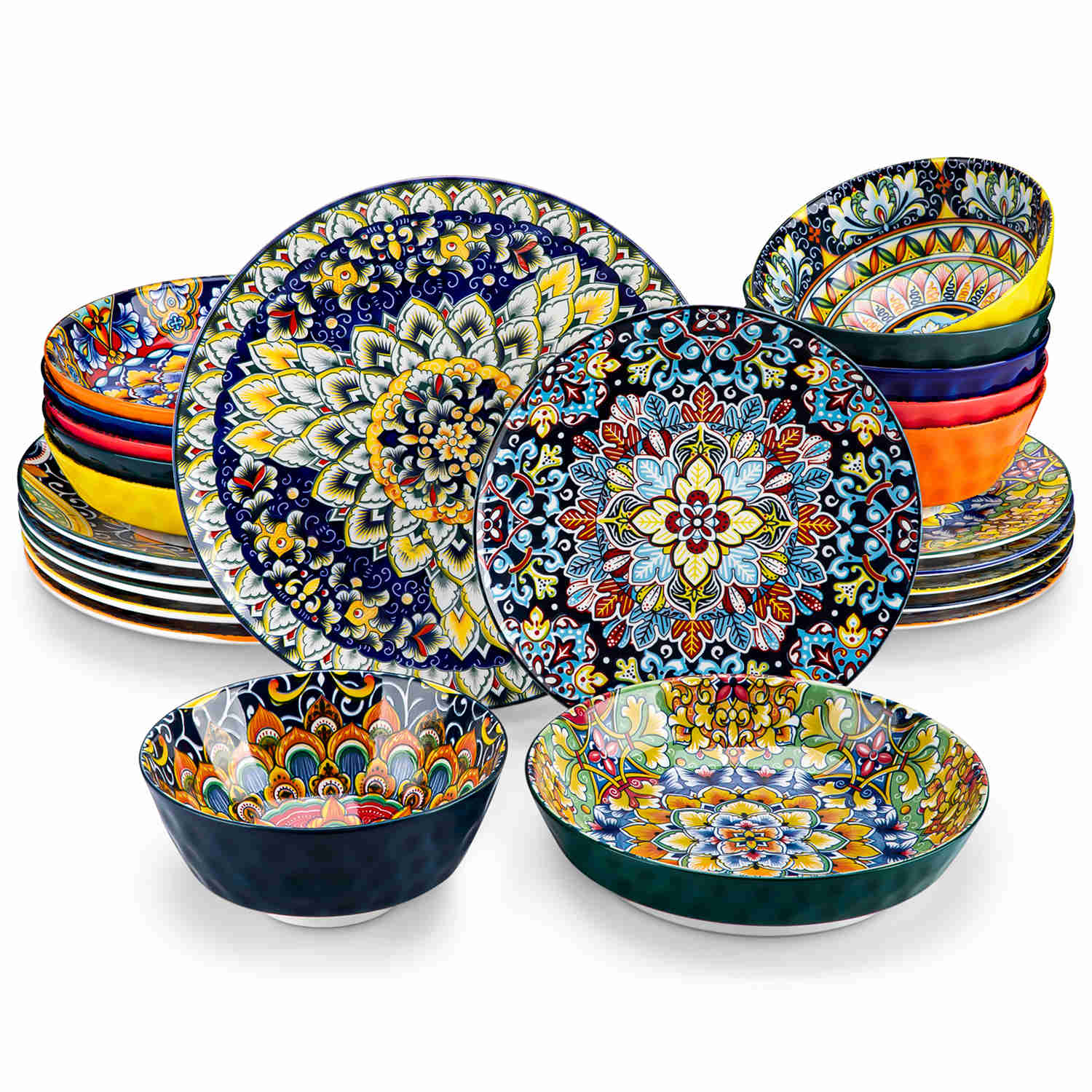
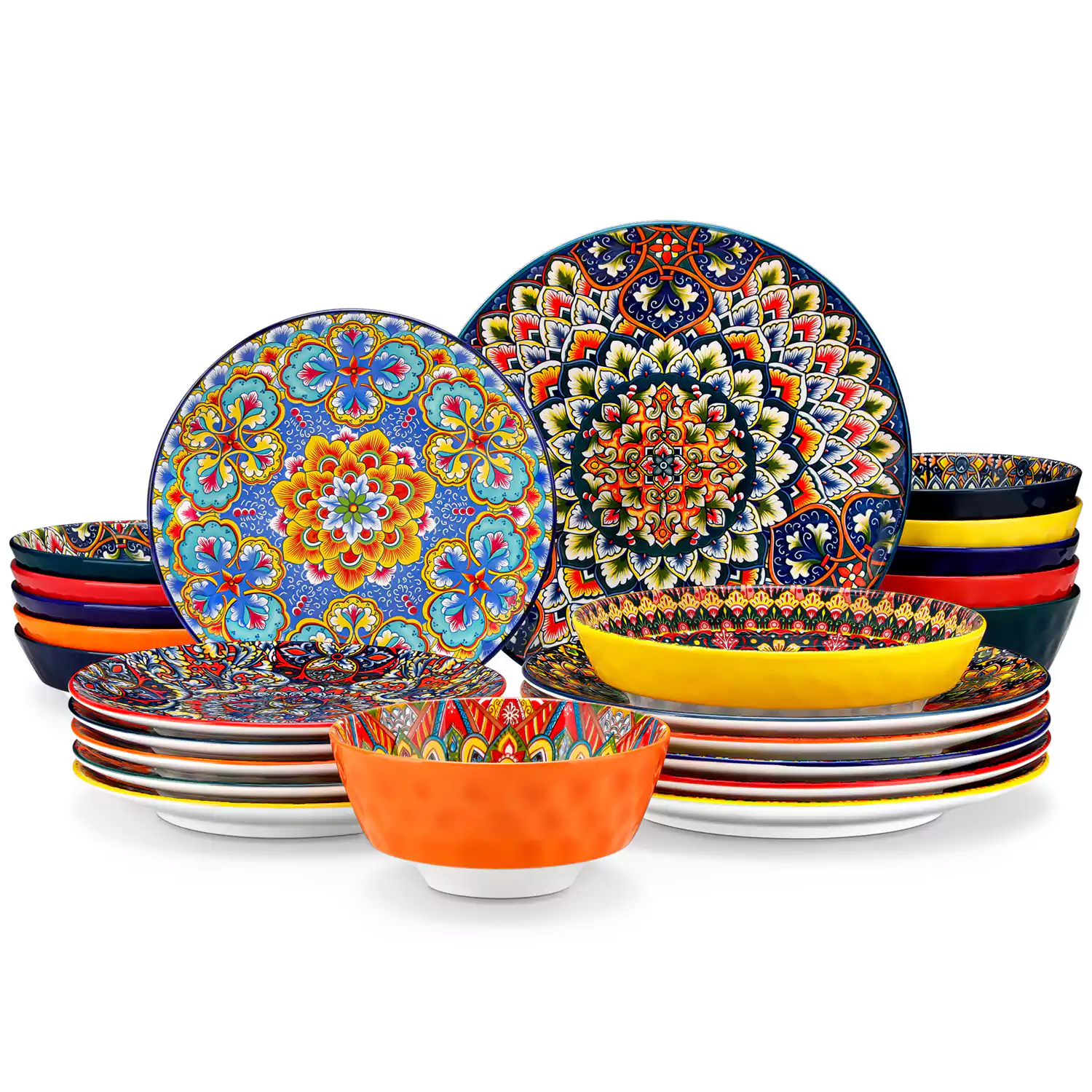
- For bold, artistic designs: Both stoneware (reactive glaze) and porcelain (hand-painted) offer exceptional visual options. Stoneware reactive glazes create uniquely organic patterns; porcelain allows for more detailed artwork.
- For oven-to-table cooking: Stoneware is the clear winner — it handles higher oven temperatures and thermal transitions better.
- For budget buyers: Standard ceramic earthenware gets the job done at a lower cost, but expect to replace it more frequently.
A Note on Safety: Lead-Free Glaze
Whatever material you choose, ensure the glaze is lead-free and cadmium-free. Some low-cost dinnerware uses glazes with heavy metals that can leach into food. All vancasso products are independently tested and certified lead-free and food-safe to FDA and EU standards. Look for this certification when shopping any dinnerware brand.
Care Tips for Each Material
Both stoneware and porcelain are dishwasher safe, but a few habits extend their life:
- Avoid stacking too many pieces directly on top of each other — use felt separators if you're storing fine porcelain
- For dishwasher cleaning, use the gentle or eco cycle to reduce impact stress
- Avoid sudden temperature changes (e.g., putting cold stoneware directly in a very hot oven)
- For stoneware, season new pieces by soaking in water for 24 hours before first use
- Hand wash hand-painted decoration pieces if the color is on the exterior for the longest color life