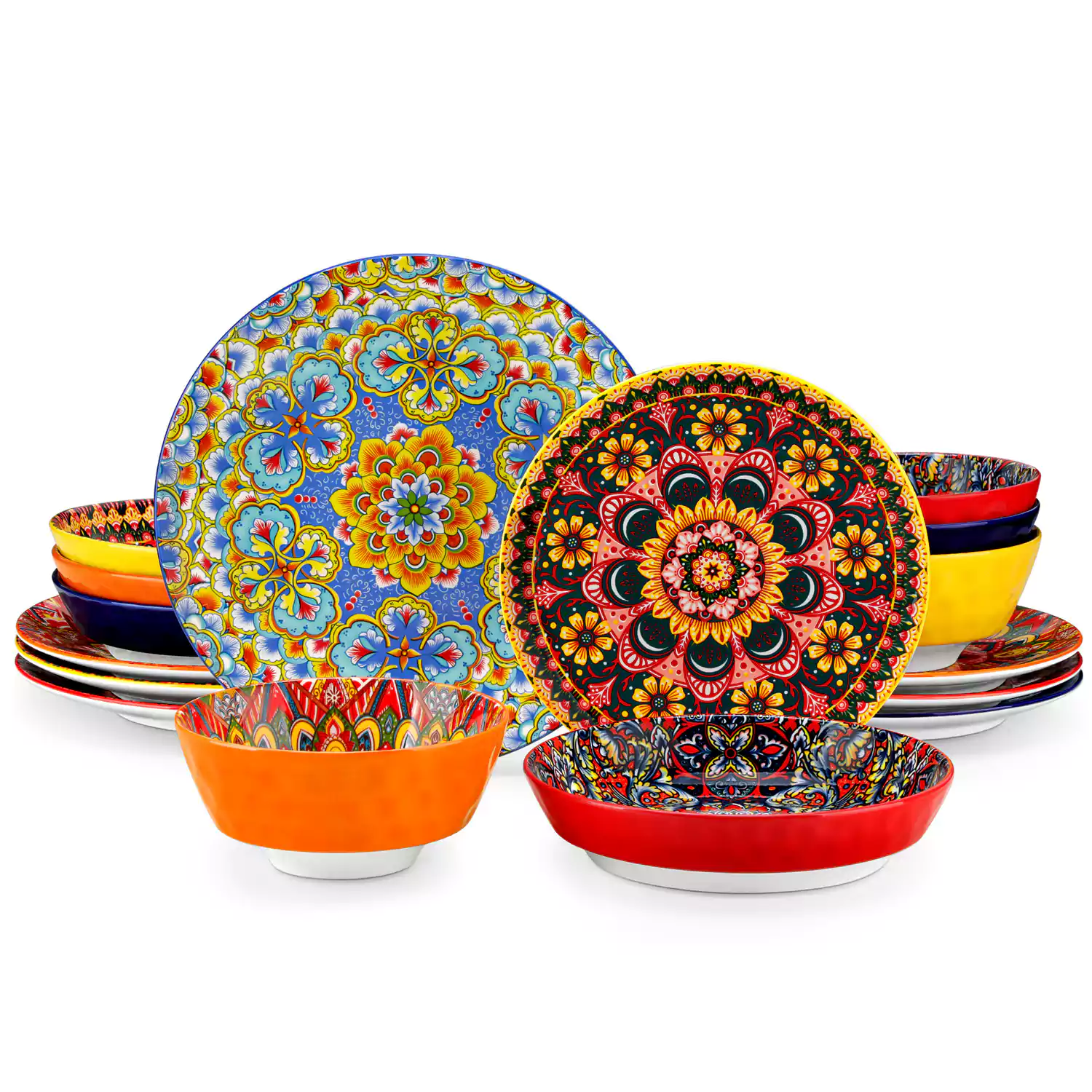
Everything you need to know about how vancasso dinnerware is made — the clay bodies, glaze chemistry, firing process, and safety certifications behind every set.
The Foundation
Dinnerware isn't just a surface for food — it's a daily-use item that faces thermal shock, mechanical stress, detergents, and acidic foods. The material determines whether a set looks as good after 300 dishwasher cycles as it did on day one.
At vancasso, we work with three primary material types — stoneware, porcelain, and earthenware — each chosen for specific collections based on the balance of durability, weight, aesthetics, and use-case. Every material and glaze combination is tested for food safety before any collection goes to production.
What We Use
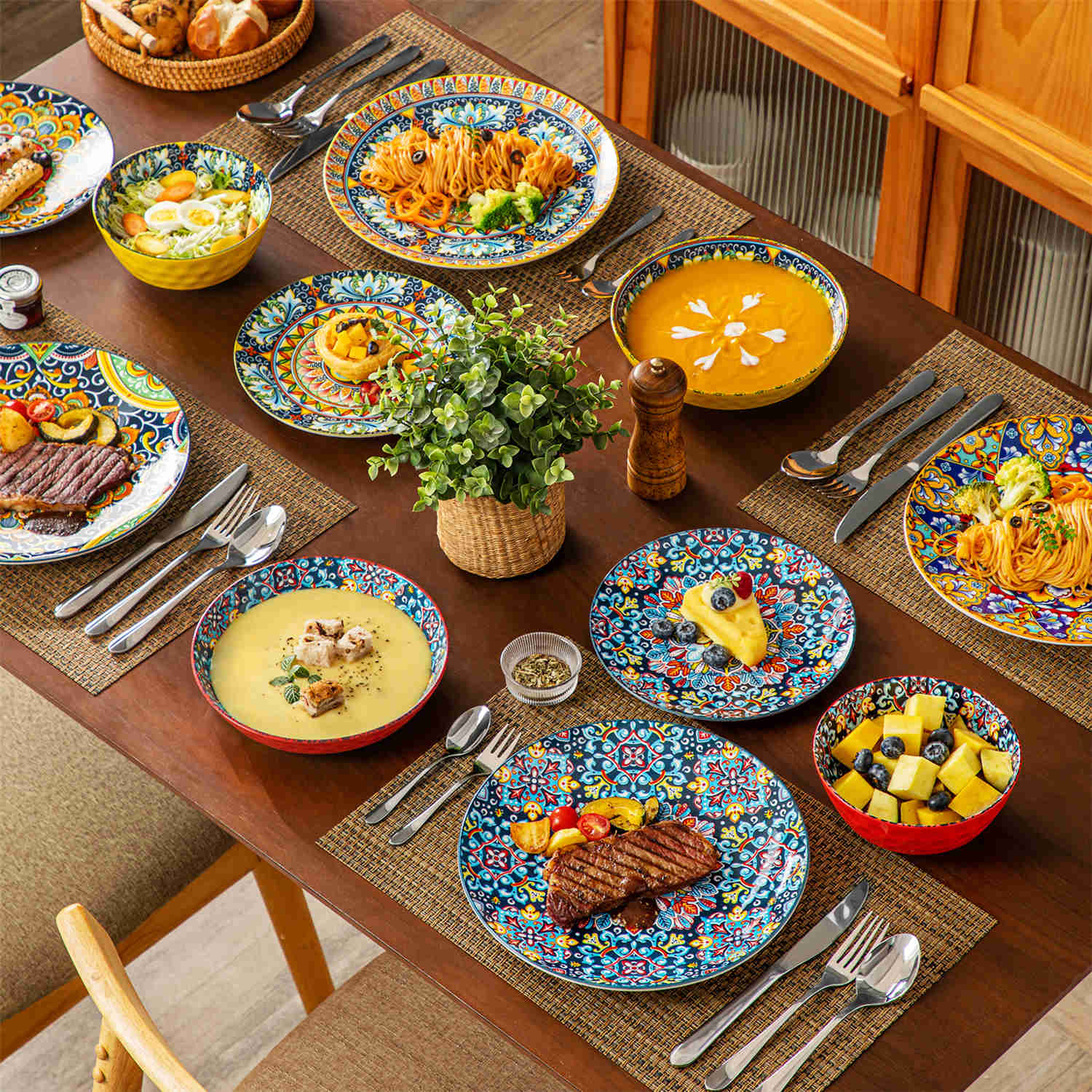
Fired above 1,280°C, our stoneware is dense, non-porous, and extremely durable. This is the material used in our most popular collections — Bohemia, Starry, and Insieme. The high firing temperature vitrifies the clay body, resulting in a water absorption rate below 0.5%.
Translucent, lightweight, and refined — our porcelain is fired at 1,240–1,280°C using a kaolin-rich clay body. Used in our formal and gift collections, porcelain offers a smooth, glassy surface that takes glaze color exceptionally well. 25% lighter than equivalent stoneware pieces.
Used in our artisan-style collections where natural variation and rustic character are part of the design intent. Fired at lower temperatures (1,000–1,150°C), earthenware is heavier and more porous — so we apply a denser glaze layer to ensure food safety and dishwasher durability.
Safety First
Every glaze used in all vancasso collections is independently tested and certified free of lead and cadmium — the two heavy metals that pose the most significant food-safety risk in ceramic dinnerware.
We test to two standards: FDA 21 CFR (US) and EU Regulation 84/500/EEC (Europe). Products sold in both markets carry both certifications. Test reports are available on request for any active collection.
Color does not compromise safety. Our glaze lab has developed over 200 proprietary color formulations that achieve vivid, stable color using only food-safe mineral oxide pigments — no organic dyes, no metallic overglaze on food-contact surfaces.
Quick Reference
| Property | Stoneware | Porcelain | Earthenware |
|---|---|---|---|
| Firing Temperature | 1,280°C+ | 1,240–1,280°C | 1,000–1,150°C |
| Water Absorption | <0.5% | <0.1% | 1–5% |
| Weight (relative) | Medium-Heavy | Light | Heavy |
| Chip Resistance | High | Medium | Medium |
| Dishwasher Safe | Yes | Yes | Yes |
| Microwave Safe | Yes | Yes | Yes |
| Oven Safe | Up to 200°C | Up to 180°C | Not recommended |
| Lead & Cadmium Free | Certified | Certified | Certified |
| Best For | Daily use, families | Gifts, formal dining | Artisan, casual style |
Looking After Your Dinnerware
All stoneware and porcelain collections are fully dishwasher safe. Use a normal cycle (up to 60°C). Avoid high-heat drying cycles for earthenware pieces — air-dry instead to extend glaze life.
All materials are microwave safe. Avoid rapid temperature changes — don't move pieces directly from freezer to microwave. Allow frozen food to thaw briefly before reheating.
Stack plates with a soft cloth or silicone pad between pieces to prevent surface scratching. Our stoneware and porcelain are chip-resistant, but no ceramic is chip-proof when stacked carelessly.
For stubborn tea or coffee stains, soak in warm water with a small amount of baking soda for 20 minutes before washing. Fine crazing (hairline glaze cracks) on earthenware is a natural feature, not a defect.